Crisis is hard on youth and staff ! Reduce the incidence of escalating situations, crisis and potential serious occurrences with Therapeutic Crisis Intervention (TCI). Built on relational practices, TCI is a trauma-informed, evidence-based, systems approach developed by Cornell University. The ability of the entire organization to respond effectively to crisis situations is critical in establishing not only a safe environment, but also one that promotes growth and development. TCI has been approved by the Government of Ontario.
What Is the Therapeutic Crisis Intervention System?
What kind of help and how it is given make a crucial difference between the child’s learning from the experience or being set back. The Therapeutic Crisis Intervention (TCI) training program for child and youth care staff presents a crisis prevention and intervention model designed to teach staff how to help children learn constructive ways to handle crisis. The ability of the entire organization to respond effectively to children and young people in crisis situations is critical in establishing not only a safe environment, but also one that promotes growth and development. The skills, knowledge, and professional judgment of staff in responding to crises are critical factors in helping young people learn constructive and adaptive ways to deal with frustration, failure, anger, rejection, hurt, and depression.
How Does the TCI System Help?
The purpose of the TCI system is to provide a crisis prevention and intervention model for residential child care organizations that will assist in: Preventing crises from occurring, de-escalating potential crises, effectively managing acute crises, reducing potential and actual injury to children and staff, learning constructive ways to handle stressful situations, and developing a learning circle within the organization.

How Was TCI Developed?
In 1979 with a grant from the National Center of Child Abuse and Neglect (NCCAN) staff of the Family Life Development Center (FLDC) at Cornell University undertook a study of child abuse and neglect in New York State group care institutions. The purpose of this study was to assess the nature and extent of child abuse and neglect when it occurs in the institutional setting, and to identify those factors associated with its incidence. Factors associated with the incidence of abuse and neglect included the inappropriate use of discipline, isolation and restraint, and poor management practices. FLDC staff spent many months researching other crisis intervention curricula, meeting with child care experts, and visiting child care agencies in order to develop a comprehensive training program that addressed the issues outlined in the research. TCI training was developed and pilot-tested at approximately eight facilities from the study sample of sixteen. Concurrently, the entire sample was involved in the testing of a model response system in reporting and investigating child abuse. From 1981 to 1982, child abuse reports (not instances of abuse) in those facilities that had pilot-tested the Cornell curriculum decreased by forty percent. In those sample facilities, which were not exposed to the new training materials, reporting increased by more than two hundred percent.
Evaluation of TCI Effectiveness TCI training test
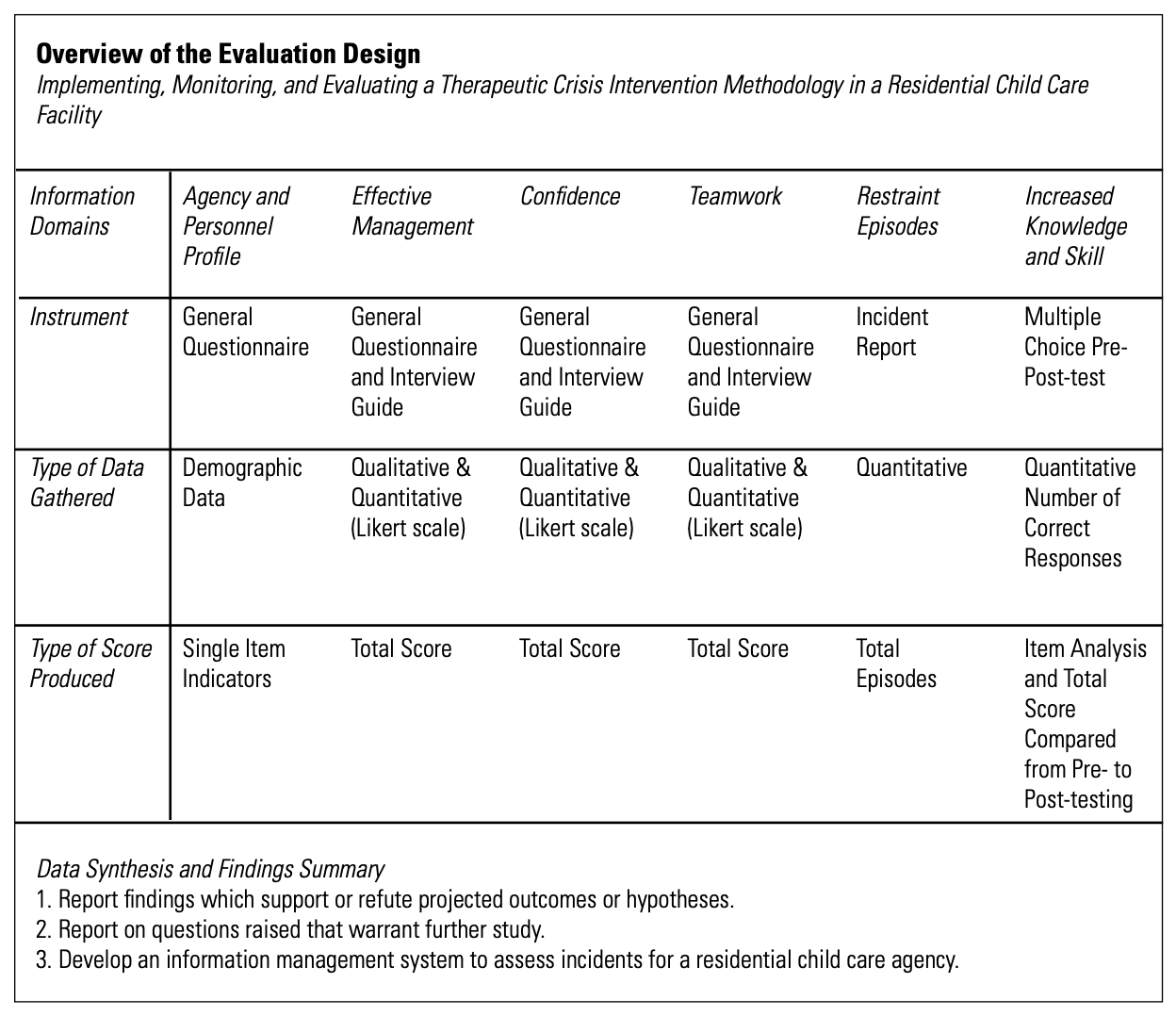
From 1994-1997, the RCCP and child caring agencies in the Northeastern United States and the United Kingdom conducted joint evaluation projects that introduced TCI into residential treatment settings and evaluated its effect on the organizations. Throughout the life of this project, critical incidents were collected and an advisory group from the agencies met with Cornell staff. Other data collection methods were pre-/post-tests, surveys, and interviews with staff supervisors and young people. All levels of residential child care personnel attended TCI training and supervisors attended additional training, to assist them in monitoring and supporting the model.
Results from the project included a decrease in physical restraint episodes, fighting incidents, physical assaults, runaways, and verbal threats. Results also indicated that after attending TCI training staff felt more confident in their ability to manage any crisis situation, work effectively with co-workers, and help young people learn to cope more successfully with crisis. Staff was less afraid to manage crisis situations and was more focused on the young people. They also reported an increase in knowledge about agency policy and procedures for crisis management.
For additional information about TCI, & TCI training test please download a copy of the TCI Systems Bulletin
International Scope of Training
Worldwide, over 3000 professionals have been certified as TCI trainers. Trainers are located throughout the United States, Canada, the United Kingdom, Ireland, Israel, Australia, New Zealand, and Bermuda.
Safeguard’s Training for Children and Adult Services is the Canadian Provider of TCI.
REFOCUS
REFOCUS is now an online newsletter of the Residential Child Care Project, Cornell University. It is a vehicle for communicating information about current issues and events that emerge from work in crisis management and residential child and youth care.
TCI Certification Process
The certification program is designed to develop, maintain, and strengthen the standards of performance for individuals who have successfully completed the requirements of the five-day Therapeutic Crisis Intervention (TCI) training. This process affirms our commitment to ensure that TCI is implemented in child caring organizations in a manner that meets the developmental needs of children, and the safety of children and staff. Certification includes an agreement to practice in accordance with TCI principles which provides a framework for TCI practice and training, and general standards that include levels of certification, regulations, and requirements for maintaining the certification process.
The intensive five-day train-the-trainer course provides agencies with in-house training capacity in the TCI curriculum which is an approved crisis intervention training program of the Ontario government. The purpose of the TCI system is to provide a crisis prevention and intervention model for organizations that will assist in:
- Preventing crises from occurring
- De-escalating potential crises
- Effectively managing acute crises
- Reducing potential and actual injury to children and staff
- Learning constructive ways to handle stressful situations
- Developing a learning circle within the organization

TCI Materials
Certified TCI Trainers can now order TCI Student Workbooks and Certificates of Attendance for Front-line Staff quickly and easily from Safeguards Training.
Safeguards Training accepts payment by credit card or cheque and ships orders quickly to agencies. (Lost or damaged TCI Trainer Materials can only be replaced by RCCP Cornell U)
This TCI Training Materials Order Form is available only to certified TCI trainers who are conducting direct TCI training. Trainers can order the following:
- TCI Student Workbooks, Edition 7
- TCI Certificates of Attendance, Edition 7
- TCI Post Crisis Response Student Workbooks
- TCI Update: TCI for Developmental Disabilities Student Workbooks
- TCI Conflict Resolution
- TCI Adapting the Life Space Interview for Proactive Aggression
- TCI for Families Student Workbook, Edition 4